Libflint
libflint is a C library of containers and helpers for Linux, macOS, OpenBSD, and FreeBSD. Container handles are generally caller-owned; pointer containers store void * payloads. Each module page covers ownership, return codes, and examples.
Modules
Data Structures
- linkedlist: Doubly-linked list of
void *. Foundation for stack, queue, and set - vector: Growable array of
void * - stack: LIFO stack of
void * - heap: Comparator-ordered pointer priority queue
- queue: Unbounded FIFO queue
- set: Small unique collection. Membership is linear
- hashmap: Generic key/value map with independent key and value ownership
- hashset: Unique collection with hashed membership
- binarytree: Binary tree you build by attaching left and right children
- bst: Unbalanced ordered binary search tree (
insert,find,remove) - ringbuf: Fixed-capacity FIFO of
void *. No allocation after init - bytering: Byte ring with caller-provided storage and atomic indices for one producer and one consumer. Lock-free operation depends on the target
- statemachine: Table-driven finite state machine with guards and entry/exit callbacks
Allocators
- memory: Arena (bump allocation with save/restore) and pool (fixed-size chunks)
Utilities
- strbuf: Owned growable string builder
- parse: Integer and token parsing from borrowed string views
- string:
lfstr_*helpers andLfStrviews - math: Integer helpers,
LfPoint, and Bresenham - bytebuf: Bounded binary cursor with explicit byte order
- codec: Hex and Base64 (encoding, not cryptography)
- puzzle: Repeating-key XOR, Hamming distance, English scoring
- crypto: Includes codec and puzzle
- input: Read a regular, seekable file into memory
- process:
lf_capture_system(popen; the command is not sanitized) - bitset: Runtime-sized compact bit array
- bitops: Macros to set, clear, toggle, test, extract, and insert bit fields
Platform
- network: IPv4
lf_listen_tcp,lf_bind_udp, andlf_close - macos: Process CPU and memory sampling (Apple only)
- compat: Overflow-checked
lf_reallocarrayon every platform
Requirements
CMake 3.17 or newer and a C compiler. The build selects C99, but bytering also requires support for C11 atomics (<stdatomic.h> and atomic_size_t). The compiler must support those in the selected language mode.
Linux needs the libbsd headers and library (strtonum in the input module). macOS, OpenBSD, and FreeBSD need no extra libraries.
Building and Testing
From the repository root:
cmake -S . -B build
cmake --build build
ctest --test-dir build --output-on-failure
The root Makefile is a thin wrapper around CMake. Tests are built when libflint is the top-level project; the files under tests/ also provide usage examples. Use ctest --test-dir build --parallel to run tests in parallel, or add --label-exclude slow to skip the slow macOS sampling test.
Compiler warnings are enabled by default for GCC and Clang (FLINT_ENABLE_WARNINGS=ON). To run with AddressSanitizer and UndefinedBehaviorSanitizer on a compiler that supports them:
cmake -S . -B build-sanitize -DCMAKE_BUILD_TYPE=Debug -DFLINT_SANITIZE=ON
cmake --build build-sanitize
ctest --test-dir build-sanitize --output-on-failure --label-exclude slow
Using libflint with CMake
If the library is checked out at lib/libflint inside your project:
add_subdirectory(lib/libflint)
target_link_libraries(your_target PRIVATE flint)
Replace your_target with an existing CMake target. The flint target exports its include/ directory; include the headers for the modules you use, such as lfvector.h or lfhashmap.h. Its private compile definitions do not propagate to your project.
Memory Management
You allocate the handle (List, Vector, and so on). The library allocates internal nodes and buffers. A destroy callback, if you pass one, frees owned payloads when the container is destroyed or cleared. Most pop and remove functions transfer the payload to you without calling that callback. Binary tree subtree removal also destroys payloads, and hash map replacement can destroy the old key and value; check the module page for the operation you use.
Why the name 'libflint'?
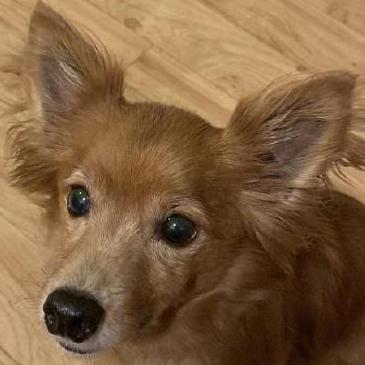
libflint is named after my dog Flint, who passed away in 2021. I miss you buddy.